Case Study: Range Rover 9.5-Hour Paint Preparation
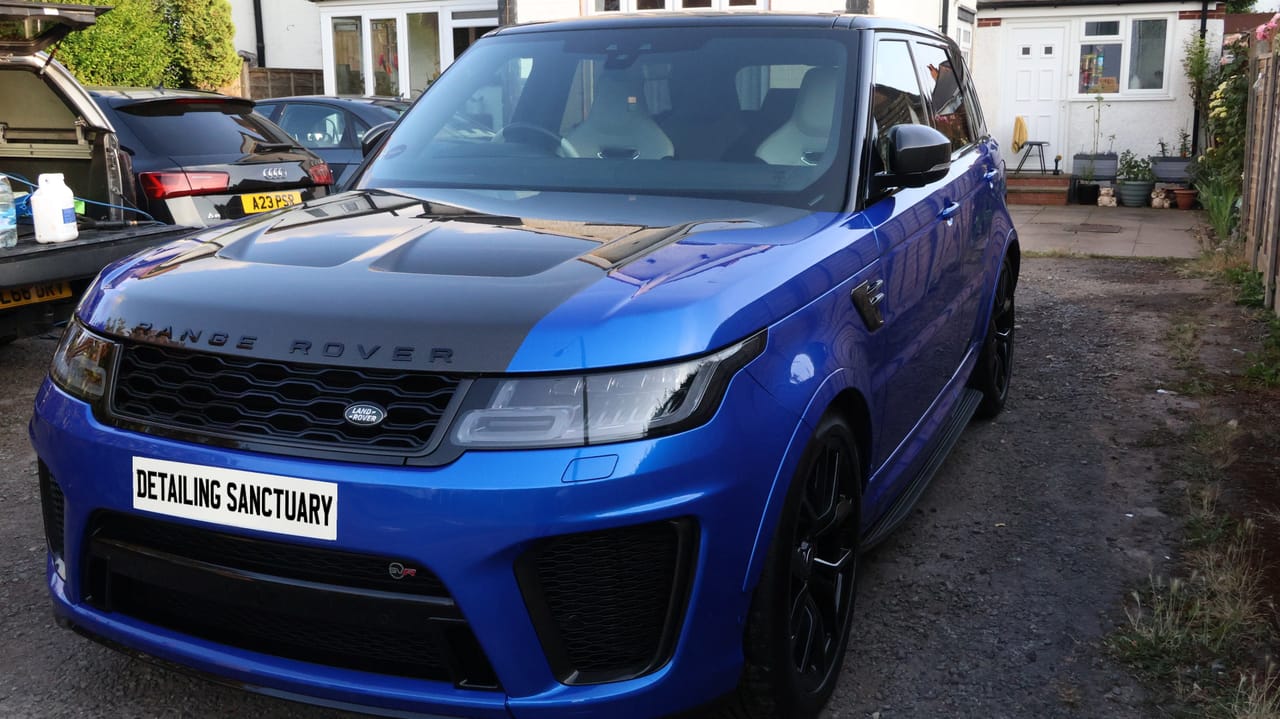
A large, dark SUV is the hardest thing to keep looking right - every wash mark shows, and there's a lot of it. This Range Rover took nine and a half hours on the drive, and here's where the time went.
By Patrick · 10 September 2026
The car and the brief
A Range Rover in dark paint, washed regularly but - like most - with a sponge and a single bucket. Under the lights the whole car was covered in the fine web of swirls that gives dark paint that flat, grey look in sunlight. The owner wanted it to look like it did on the forecourt, and wanted it protected so it stayed that way. Nine and a half hours on site, on the driveway.
Hours one to three: getting to clean
Wheels and arches first, because they throw dirt back onto clean panels. Then a snow foam pre-wash to lift the loose grime without touching the paint, a two-bucket contact wash, and chemical decontamination - iron remover turning purple across the lower panels where the fallout sat, tar remover on the sills and behind the wheels. Clay bar over the whole car, which on a vehicle this size is an hour on its own. Only now was the paint actually clean enough to inspect.
Hours three to eight: the polish
A Range Rover has a lot of paint, most of it flat, which sounds easy and isn't - flat panels show every hologram. The swirling needed a proper correction stage rather than a gloss enhancement: a compound on a cutting pad to level the clear coat, then a finishing polish to bring back clarity, panel by panel under inspection lighting, checking each section before moving on. Roof, bonnet and tailgate take the most time because they take the most weather. Around 85-90% of the defects removed; the deeper scratches through the clear coat are paint, not polish.
Hours eight to nine and a half: locking it in
Panel wipe to strip the polish oils, then a ceramic coating applied and levelled by hand. Glass coated so the screen clears at speed. Tyres and trim dressed, and a walk-round with the owner in the last of the light - the point where a dark car you've just corrected looks like a mirror, and the owner sees what "corrected" means for the first time.
Why it took nine and a half hours
Because a large dark SUV is the worst case for every stage: the most paint to clean, the most swirls to remove, the most panel to coat. We quoted the day honestly up front - a lighter polish would have been five hours and left half the swirls - and the owner chose the full job. That's always the conversation: here's what it needs, here's what it takes, your call.
Why dark SUVs swirl so badly
Three reasons. Dark paint shows every defect, because swirls scatter light and against black or dark blue there's nothing to hide behind. SUVs have more paint - a Range Rover has roughly twice the panel area of a hatchback - so the same wash technique inflicts twice the marring. And tall, flat panels like a bonnet and a roof are exactly where a sponge drags in straight lines under pressure. Add hard-water spotting on a car that's rinsed with a hose and left to dry, and you have the flat, grey look that most dark SUVs wear within two years of new. None of it is permanent damage; all of it is clear-coat depth, which is why a proper correction brings it back.
How to keep it corrected
Correction is permanent - the defects are gone - but the next sponge puts them back. The owner of this car went onto a fortnightly maintenance plan for exactly that reason: two buckets, a mitt, deionised water and a proper dry, every two weeks, by someone who won't take a shortcut in the rain. If you'd rather do it yourself, the rules are the same, plus: wash in the shade, roof and bonnet first while they're cool, one panel at a time, and never let a dirty mitt back into the clean bucket. A coated, corrected dark SUV washed that way stays looking like it did at the walk-round for years. Washed with a brush at the garage, it's back to grey in a season.
What the day cost, and the alternative
A full correction day like this is quoted after seeing the paint, because the hours depend on the swirling. Multi-stage correction is quoted per car; on a Range Rover with this panel area and this condition, the nine and a half hours was quoted honestly up front, with the coating added on top. The alternative was the Make Over - a single-stage gloss enhancement at around five hours from £285 - which would have lifted 25-35% of the swirls and made the car look markedly better on the driveway. The owner wanted the car right rather than better, and was told the difference in hours and money before choosing. That conversation is the job: here's what it needs, here's what each option achieves, here's the price of each, your call.

Talk to us about your car
Send a photo, the car and your postcode. You'll get an honest recommendation and a fixed price.