
How to Prepare Your Car for Sale and Get More Money for It
Most buyers decide in the first thirty seconds - on the photos before they've visited, and on the smell before they've sat down. Here's where to spend your time and money so the car sells faster and for more.
By Patrick · 10 September 2026
What buyers actually judge
Not the service history - they'll ask for that later. On arrival, a buyer reads three things almost instantly: does it look cared for, does it smell clean, and are there any surprises. A car that's spotless, smells of nothing, and has clear headlights and dressed tyres tells them "this person looked after it" before a word is said. Everything else - mileage, the negotiation - happens against that first impression.
Outside: clean beats shiny
A properly clean car outsells a badly polished one. Wash it thoroughly, including door shuts, sills and the inside of the fuel flap - buyers open everything. Clay the paint if it feels gritty. Dress the tyres and clean the alloys properly, including the barrels; dirty wheels make a clean car look neglected. If the paint is swirled, a single-stage machine polish is worth it on a car over about £8,000; below that, a good wax makes it gleam for the photos and that's enough.
Headlights matter more than people expect. Cloudy, yellow lenses make a car look old and raise MOT questions in a buyer's mind. Restoring them costs £75 and changes the whole face of the car.
Inside: remove everything, then remove the smell
Empty the car completely - glovebox, door pockets, boot, under the seats. Buyers open all of it. Hoover thoroughly, then shampoo the seats and carpets; stains that have been there so long you've stopped seeing them are the first thing a stranger sees. Clean the glass inside, which is where a car looks grubbiest in photos.
Then the smell. Smoke, dog and damp are deal-breakers, and air fresheners make it worse because buyers know exactly what they're hiding. If the car has a smell, it needs an extraction and an ozone treatment, not a Magic Tree.
The engine bay
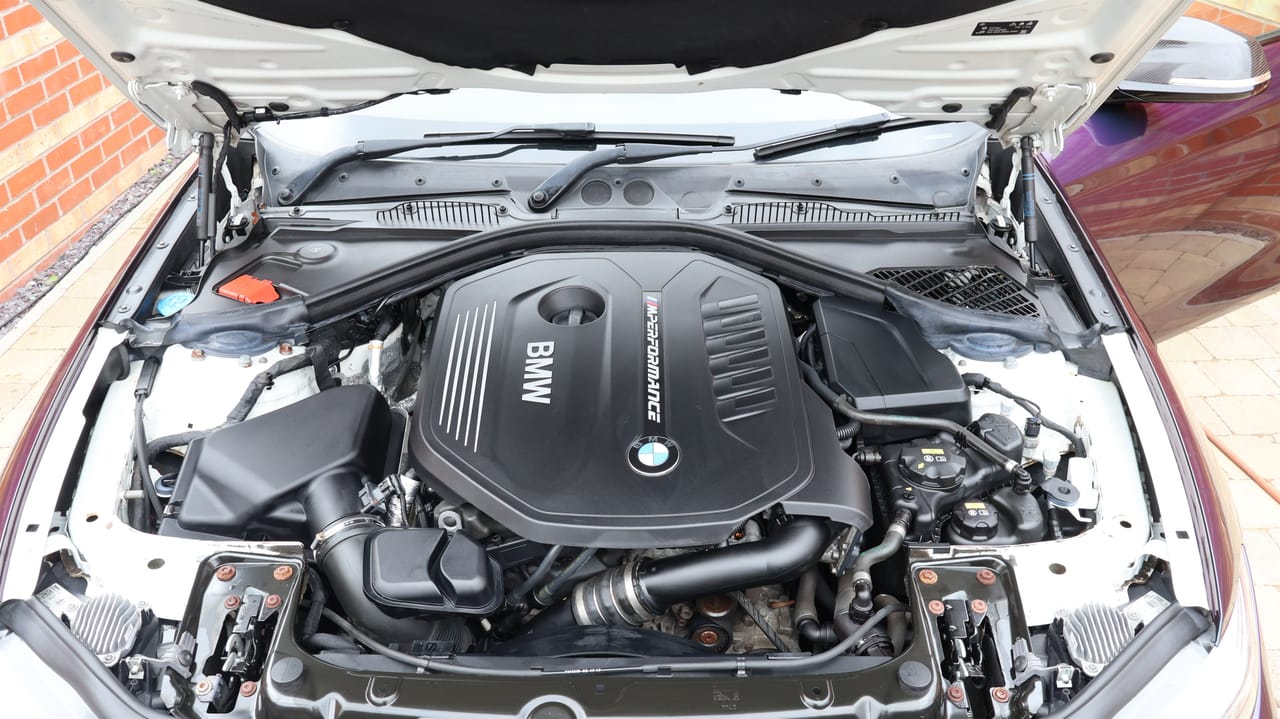
Nobody expects a showroom engine bay on a used car, but a dusty one with leaves in the scuttle suggests it's never been looked at. A careful clean and dress - sensitive areas covered, minimal water - takes an hour and is one of the highest-value things on the whole list, because so few sellers bother.
Photos: where most private sales are lost
A listing lives or dies on its photos. Take them after the prep, in soft light - an overcast day or early evening, not midday sun. Find a plain background: an empty car park corner, not your drive with the bins. Shoot the standard set: front three-quarter, rear three-quarter, both sides, all four wheels, dashboard, front seats, rear seats, boot, engine bay, and the mileage on the dash. Wipe the tyres between shots. Never photograph it wet - it looks great to you and hides everything from a buyer, who'll assume the worst.
This is the part our sale package does for you: a professional photoshoot once the car's finished, ready to upload to AutoTrader, Marketplace or eBay.
What not to bother with
Don't pay for paint correction on a £3,000 car. Don't touch in stone chips with a brush the day before - it looks worse than the chips. Don't fill the car with new mats and air fresheners; buyers read that as covering something. Don't list it before the prep is done; the first 48 hours of a listing get the most views and you only get them once.
The money
On a private sale, a professionally prepared car typically sells faster and closer to the asking price, because the buyer has fewer things to knock money off for. The prep pays for itself several times over on most cars - and even on a trade-in, a clean, odour-free car with clear lights gets a better offer than the same car dirty, because the dealer is pricing in their own valet.
A one-week timeline
Seven days out: gather the paperwork - V5C, MOT history, service book, receipts - and book the prep. Five days out: fix the cheap things buyers notice: a blown bulb, a low tyre, a missing wheel cap, the empty washer bottle. Three days out: the detail - exterior, interior, engine bay, headlights, odour if needed. Two days out: photos, in good light, after the prep and before the car is driven again. Listing day: upload the full photo set, write an honest description that mentions the recent detail, and price it against the same model, year and mileage within 30 miles. The first 48 hours of a listing get the most views; don't spend them on a dirty car.Trade-in versus private: does prep still pay?
On a private sale, prep pays back several times over - buyers pay more and haggle less for a car that looks cared for, and it sells in days rather than weeks. On a trade-in or a webuyanycar-style sale, the return is smaller but real: the buyer's appraiser prices in their own valet and knocks money off for every smell, stain and cloudy headlight they see. A clean, odour-free car with clear lights gets a better offer, and on a part-exchange it also removes the dealer's easiest excuse. Where prep doesn't pay is paint correction on a cheap car - a £3,000 hatchback wants a Full Valet and a wax for the photos, not a machine polish.

Talk to us about your car
Send a photo, the car and your postcode. You'll get an honest recommendation and a fixed price.